How to Choose the Right Commercial Roofing Contractor in Minneapolis
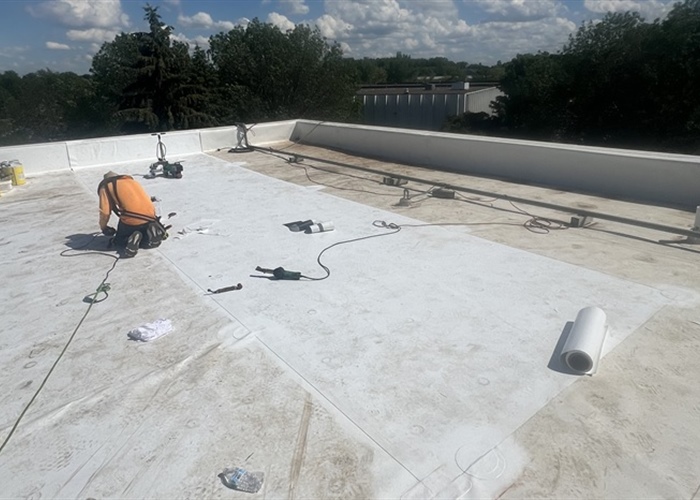
Choosing the right commercial roofing contractor in Minneapolis is not just about finding the lowest bid or the first company that returns a call. A commercial roof is a building system with real consequences for operations, tenant comfort, insurance exposure, energy performance, and capital planning. If the contractor misses code requirements, installs the wrong membrane for the structure, or leaves details unresolved at penetrations and drains, the cost usually shows up later in leaks, downtime, and repeat repairs. That is why building owners and facility managers need a contractor with strong technical judgment, proven commercial experience, and a clear process from inspection through closeout. RN Roofing’s existing roofing services content reflects that same practical focus on long-term roof performance, not short-term patchwork.
Minneapolis properties add another layer of difficulty because commercial roofs here deal with freeze-thaw cycles, snow loads, summer heat, storm exposure, and strict construction oversight. A contractor must be able to explain how licensing, insurance, system selection, warranties, materials, and project scheduling all affect the final result. The sections below break that process into five areas that matter most: compliance, system-specific experience, reputation, warranty and material standards, and the quality of estimates and communication. For readers comparing providers, these are the checkpoints that separate a contractor who can manage a commercial project well from one that simply knows how to sell one.
Verify Minnesota Licensing, Insurance & Code Compliance
Before comparing products or pricing, verify that the contractor is properly qualified to perform commercial work in Minnesota. This step matters because Minnesota treats residential and commercial contracting differently, and many owners assume a “roofer license” is the only credential that matters. For commercial roofing, the key issue is whether the company is legally set up for the work it performs, carries current insurance, complies with workers’ compensation requirements, and can manage permit and inspection obligations for the project scope. A contractor that cannot explain this clearly is already creating risk before work begins.
Insurance review should be just as strict. Ask for current certificates of general liability and workers’ compensation coverage, and review them rather than accepting vague verbal assurances. Commercial roofing involves fall exposure, hot work on some systems, rooftop equipment, pedestrian protection, staging, and material handling across occupied properties. If the contractor’s coverage is incomplete or outdated, the owner can be pulled into disputes over property damage, worker injury, or subcontractor responsibility. The safer choice is a contractor that provides complete documentation, explains who is covered, and defines how site safety and incident reporting will be handled.
Local compliance is not a formality in Minneapolis. Commercial roofing projects may involve permits, required inspections, approved plans, and final sign-off depending on the scope. A capable contractor should be able to explain how Minnesota code requirements, Minneapolis review procedures, drainage details, insulation upgrades, and roof penetrations affect the project. That technical fluency matters as much as installation skill. In practice, one of the clearest signs of a qualified provider is whether the company can connect compliance planning with actual roofing services, including replacement, repair, and maintenance decisions that hold up under inspection and over time.
Choose a Contractor With Proven Commercial Roofing System Experience
Commercial roofing experience is system-specific. A contractor who does excellent work on one assembly may not be the right choice for another. Flat and low-slope commercial roofs demand expertise in membrane behavior, seam design, flashing details, insulation layout, attachment methods, drainage strategy, and rooftop traffic management. That is why owners should ask not just how long a contractor has been in business, but which systems the team installs regularly and how many similar projects it completes each year. Experience with TPO, EPDM, metal, and built-up systems is meaningful only when it includes project volume, repair history, and real understanding of failure points.
TPO and EPDM, for example, are both common commercial systems, but they behave differently in the field. TPO requires consistent seam welding, good substrate preparation, and attention to chemical exposure and ponding conditions. EPDM relies on seam integrity, flashing quality, and disciplined detailing around penetrations and edge conditions. Built-up roofing adds another layer of complexity with multi-ply construction, surfacing choices, and heavier system design. Metal systems involve panel layout, fastening strategy, expansion and contraction movement, edge metal coordination, and waterproofing at transitions. A contractor that treats all of these as interchangeable “flat roof” options is oversimplifying the job.
Large-scale project experience matters just as much as system knowledge. A true commercial contractor should be comfortable working around active tenants, staging material deliveries, sequencing tear-off and dry-in, protecting interiors, coordinating around rooftop HVAC equipment, and maintaining safe access throughout the project. In the workbook, RN Roofing’s service pages repeatedly stress new installations, quick repairs, preventative maintenance, and experience with built-up roofing, EPDM, and TPO. That matters because broad commercial experience is not just about installing membranes. It is about understanding how those systems perform on real buildings with real operating constraints.
Review Reputation, References & Minneapolis Commercial Roof Projects
Reputation should be judged by evidence, not marketing claims. Start with reviews, but read them for patterns rather than star counts alone. Look for recurring comments about clean job sites, responsiveness, schedule discipline, workmanship quality, and how the contractor handled issues after work began. Those details reveal far more than generic praise. A company with a strong commercial track record usually earns consistent feedback around reliability, communication, and whether the job was done correctly the first time.
Past-project review is even more useful. Ask for examples that match your property type, roof size, membrane type, and building use. A warehouse, retail center, office building, manufacturing plant, and institutional property all place different demands on a roofing crew. The best reference list is not the longest one. It is the most relevant one. Case studies, project photos, and references from comparable buildings help owners confirm whether the contractor has solved similar drainage issues, access limitations, safety requirements, and scheduling constraints before.
Local work in the Minneapolis area deserves extra weight because climate and code familiarity affect installation quality. A contractor that has repeatedly worked on commercial projects in this market is more likely to understand snow exposure, storm interruptions, freeze-thaw stress, and the timing issues that often shape commercial roof replacement schedules in the Twin Cities. The workbook reinforces this point through RN Roofing’s past-project, reviews, and weather-focused blog content: owners should not separate technical skill from local experience. In commercial roofing, track record is strongest when it combines workmanship proof, regional project history, and visible consistency across completed jobs.
Compare Roofing Warranties, Materials & Workmanship Protection
Warranties are often misunderstood because the word “warranty” can describe very different forms of protection. Some documents cover material defects only. Others cover the installed roof system. Some include labor for leak repairs, while others do not. Some are capped financially, and others are structured as no-dollar-limit system guarantees for qualifying assemblies. Owners should ask for sample warranty documents before signing a contract and review who backs the coverage, what triggers a claim, what exclusions apply, and whether the warranty can be transferred if the property is sold.
Material quality should be reviewed at the same level of detail. The question is not simply whether the membrane is TPO, EPDM, metal, or built-up roofing. The better question is which manufacturer, which assembly, which insulation package, which cover board, which attachment method, and which flashing and edge details are being specified. A good contractor should explain why that assembly fits the building’s slope, exposure, traffic level, energy goals, and maintenance plan. Material choice and workmanship are linked. A premium membrane installed with weak detailing can fail early, while a properly designed system with disciplined installation and compatible components is much more likely to perform as expected.
Workmanship guarantees fill the gap that product warranties often leave behind. If the manufacturer covers only product defects, workmanship errors may still fall back on the contractor. That is why owners should ask who stands behind seams, flashings, penetrations, transitions, and edge terminations after substantial completion. In practice, the best protection usually comes from a combination of manufacturer-backed system coverage and a clear contractor workmanship commitment with defined terms, response expectations, and documentation. When a contractor cannot explain that distinction in plain language, the owner is being asked to accept risk without being shown where it lands.
Compare Roofing Estimates, Project Timelines & Communication
A commercial roofing estimate should be read as a scope document, not just a price. Owners should compare what each contractor includes for tear-off, deck inspection, insulation replacement, cover boards, membrane thickness, flashing details, edge metal, drain work, rooftop equipment coordination, cleanup, warranty registration, and closeout documentation. A low bid can look attractive until it becomes clear that key items were excluded or left vague. The strongest estimate is usually the one that makes the scope easiest to audit because it shows exactly what the owner is buying.
Timeline review should go beyond the projected start date. Ask how the contractor sequences the job, how weather days are handled, how dry-in is maintained, what lead times apply to materials, and how occupied spaces will be protected during active work. In Minneapolis, timeline credibility depends heavily on the contractor’s ability to plan around changing weather and keep communication tight when conditions shift. The related blog content in the workbook points to an important local truth: weather delays are normal, but poor planning is not. A serious contractor builds realistic buffers into the schedule and explains them early.
Communication is where many commercial roofing projects either stabilize or unravel. Owners should expect a designated point of contact, documented change-order procedures, routine schedule updates, photo-based progress reporting when appropriate, and a clear path for addressing field issues. Responsiveness during bidding is usually a preview of responsiveness during construction. If a contractor is vague, slow, or inconsistent before the contract is signed, that pattern often continues after work starts. By contrast, a contractor with a disciplined communication process makes it easier for stakeholders, tenants, and facilities teams to manage the project from first estimate through punch list. For owners evaluating overall fit, the company website can also show whether the contractor presents that process clearly, as RN Roofing does through its service, maintenance, and project content.
Work With a Commercial Roofing Contractor That Understands the Full Picture
Choosing the right commercial roofing contractor in Minneapolis means hiring a company that can manage the technical, legal, and operational parts of the job at the same time. That includes verifying compliance requirements, matching the roofing system to the building, documenting prior work, explaining warranty protection clearly, and presenting a scope and timeline that can stand up to scrutiny. RN Roofing has built its commercial roofing content around those practical concerns, with a strong emphasis on replacements, repairs, preventative maintenance, and system-specific work across flat and low-slope properties.
For owners who want direct guidance on any of these issues, RN Roofing can walk through contractor qualifications, roof system options, warranty structure, maintenance planning, and project scope in a way that is grounded in commercial roofing practice rather than sales language. You can reach RN Roofing at 952-334-3702. When you are ready to discuss your project, request an estimate or contact us to speak with their team.